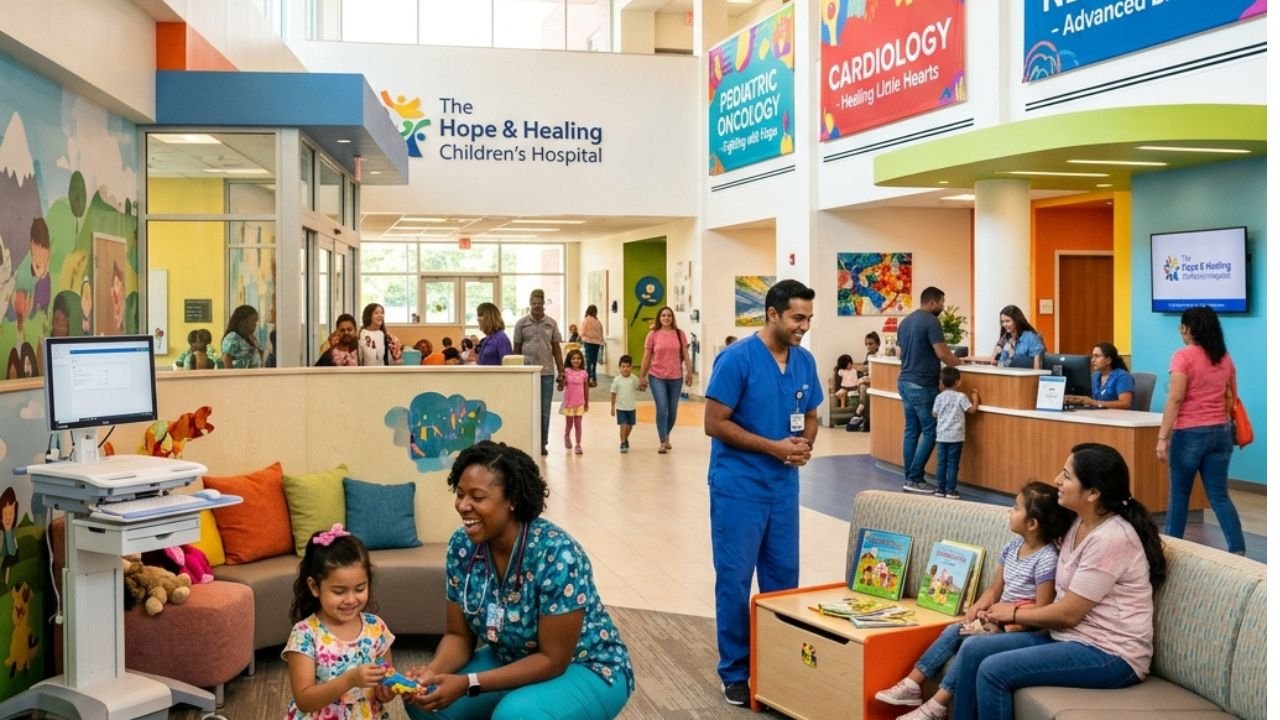
The best children’s hospitals in America for specialized care include Boston Children’s Hospital, Texas Children’s Hospital, and the Children’s Hospital of Philadelphia. These institutions lead the nation in pediatric oncology, cardiology, neurology, and orthopedics, offering advanced treatments, cutting-edge clinical trials, and comprehensive family support services.
When a child faces a complex medical diagnosis, finding the right medical team becomes the most critical priority for any family. Standard pediatric care handles routine illnesses and developmental milestones, but severe or rare conditions require an entirely different level of medical intervention. Specialized pediatric care focuses on diagnosing, treating, and managing complex health issues that demand highly specific expertise, advanced medical technology, and a multidisciplinary approach.
Navigating the landscape of pediatric healthcare in the United States can feel overwhelming for parents and caregivers. The medical terminology, the sheer number of treatment options, and the emotional weight of a child’s illness combine to create a highly stressful environment. Knowing where to look for top-tier medical care can significantly alleviate some of this burden, giving families a clear starting point on their medical journey.
Fortunately, the United States is home to some of the most advanced and highly regarded pediatric medical centers in the world. These institutions dedicate their resources exclusively to pediatric medicine, ensuring that every piece of medical equipment, every treatment protocol, and every hospital room is designed specifically for children. They attract the brightest medical minds and lead groundbreaking research that continually pushes the boundaries of what is medically possible for young patients.
This guide provides a comprehensive overview of the best children’s hospitals in America for specialized care. By examining the specific strengths of these leading institutions, the criteria used to evaluate them, and the essential factors parents must consider, families can make informed decisions about their child’s healthcare needs.
What criteria define the leading children’s hospitals in the United States?
Identifying the best children’s hospitals requires a standardized, objective evaluation of medical facilities across the country. The most widely recognized and respected benchmarking organization in this field is U.S. News & World Report. Each year, U.S. News & World Report publishes a comprehensive ranking of pediatric hospitals, evaluating them across multiple specialties such as cancer, cardiology, and orthopedics.
These rankings rely on rigorous clinical data. Evaluators analyze patient outcomes, including survival rates and complication rates, to determine the effectiveness of a hospital’s treatment protocols. High survival rates in complex surgeries, such as congenital heart defect repairs or brain tumor removals, heavily influence a hospital’s overall score. Furthermore, the organization measures infection rates to ensure the hospital maintains a safe environment for highly vulnerable patients.
Beyond clinical outcomes, evaluators assess the depth and breadth of specific medical programs. A top-tier children’s hospital must offer a comprehensive range of services within a given specialty. For example, a leading pediatric oncology program must provide access to bone marrow transplants, advanced radiation therapies, and specialized cellular therapies like CAR T-cell therapy. The presence of specialized clinics dedicated to rare diseases also elevates a hospital’s standing, as it demonstrates a commitment to treating the most complex cases.
Finally, the rankings heavily weigh the level of patient and family support services. Pediatric medicine requires a holistic approach that treats the entire family unit. Evaluators look for hospitals that provide robust child life programs, comprehensive social work services, mental health support for parents and siblings, and educational accommodations for long-term patients. Institutions that excel in these areas recognize that healing involves more than just medical interventions; it requires psychological and emotional support.
Which American children’s hospitals provide the top specialized care?
Different hospitals excel in different areas of medicine. When a child requires specialized care, parents should seek out the institution that leads the nation in that specific medical field. Below is a detailed look at four hospitals renowned for their expertise in specific pediatric specialties.
Which hospital is best for pediatric oncology and hematology?
Dana-Farber/Boston Children’s Cancer and Blood Disorders Center consistently ranks as a premier institution for pediatric oncology and hematology. Located in Boston, Massachusetts, this partnership combines the research capabilities of the Dana-Farber Cancer Institute with the pediatric expertise of Boston Children’s Hospital.
The center focuses on treating the rarest and most aggressive forms of childhood cancer, including leukemia, lymphoma, brain tumors, and solid tumors. Dana-Farber/Boston Children’s Cancer and Blood Disorders Center offers highly specialized treatments such as stem cell transplantation and targeted gene therapies. Their precision medicine program analyzes the genetic makeup of a child’s specific tumor to tailor treatments that attack cancer cells while minimizing damage to healthy tissue.
Choose Dana-Farber/Boston Children’s Cancer and Blood Disorders Center if your child requires access to the latest Phase I and Phase II clinical trials for rare pediatric cancers. The hospital’s deep integration with Harvard Medical School ensures that patients have access to experimental therapies long before they become widely available at other institutions.
Which hospital leads in pediatric cardiology and heart surgery?
Texas Children’s Hospital in Houston, Texas, stands out as the national leader in pediatric cardiology and heart surgery. The hospital’s Heart Center manages some of the most complex congenital heart defects and acquired heart diseases in premature infants, children, and adolescents.
Texas Children’s Hospital pioneered many surgical techniques used today to repair complex heart defects. The surgical team routinely performs high-risk procedures, including heart transplants and lung transplants, with survival rates that exceed national averages. Furthermore, the hospital features a dedicated cardiovascular intensive care unit (CVICU) staffed entirely by pediatric cardiac specialists, ensuring specialized monitoring around the clock.
Choose Texas Children’s Hospital if your child has a severe congenital heart defect diagnosed in utero. The hospital’s Fetal Center works seamlessly with the Heart Center to plan complex interventions immediately upon birth, and in some cases, the surgical team can perform life-saving cardiac procedures while the baby is still in the womb.
What is the top facility for pediatric neurology and neurosurgery?
The Children’s Hospital of Philadelphia (CHOP) offers an internationally recognized program for pediatric neurology and neurosurgery. Located in Pennsylvania, CHOP’s Neuroscience Center treats a vast array of neurological conditions, ranging from intractable epilepsy and cerebral palsy to complex brain and spinal cord tumors.
CHOP utilizes advanced neuroimaging and diagnostic mapping technologies to plan highly precise surgical interventions. The neurosurgery team specializes in minimally invasive techniques, which reduce recovery times and minimize the risk of neurological deficits. CHOP also houses a dedicated pediatric epilepsy monitoring unit and offers dietary therapies, neurostimulation devices, and surgical resections for children whose seizures do not respond to standard medications.
Choose the Children’s Hospital of Philadelphia if your child requires complex neurosurgery for a brain tumor or a severe movement disorder. The institution’s multidisciplinary approach ensures that neurosurgeons, neurologists, oncologists, and rehabilitation specialists collaborate directly to optimize the child’s long-term cognitive and physical development.
Where should parents go for pediatric orthopedics and sports medicine?
Children’s Hospital Colorado in Aurora, Colorado, boasts one of the most advanced pediatric orthopedic and sports medicine programs in the United States. The hospital treats musculoskeletal conditions ranging from severe spinal deformities like scoliosis to sports-related injuries and complex bone fractures.
The orthopedic surgeons at Children’s Hospital Colorado utilize cutting-edge technology, including 3D printing and advanced motion analysis laboratories, to customize treatments for growing bodies. The hospital’s spine program specializes in magnetically controlled growing rods, which allow surgeons to correct spinal curvature over time without requiring multiple invasive surgeries. Additionally, the sports medicine center focuses heavily on injury prevention and specialized rehabilitation for adolescent athletes.
Choose Children’s Hospital Colorado if your child has a complex spinal deformity or requires advanced reconstructive orthopedic surgery. The hospital’s focus on preserving mobility and accommodating the rapid growth phases of childhood ensures that surgical interventions provide long-lasting benefits.
What factors should parents consider when choosing a specialized children’s hospital?
Selecting the right hospital involves evaluating multiple factors beyond national rankings. Parents must assess how well a facility aligns with their child’s specific medical needs and their family’s logistical constraints.
How important is the expertise of the medical staff?
The expertise of the clinical team is the most critical factor in specialized care. Parents should research the specific physicians leading the medical programs. Look for board-certified pediatric specialists who have completed advanced fellowships in their respective sub-specialties. It is also beneficial to review the volume of specific procedures a surgical team performs annually. Surgeons who perform a high volume of a specific, complex procedure generally achieve better patient outcomes and lower complication rates.
Does the hospital offer advanced technology and treatment options?
State-of-the-art medical technology directly impacts diagnostic accuracy and treatment efficacy. Parents should inquire whether the hospital utilizes the latest diagnostic imaging equipment, robotic surgical systems, and precision medicine programs. Advanced technology often allows for less invasive procedures, which translates to shorter hospital stays and reduced pain for the child. Furthermore, hospitals equipped with advanced genetic testing capabilities can offer highly personalized treatment plans tailored to the specific biological markers of a child’s disease.
How does the hospital handle family support services and patient experience?
A child’s illness disrupts the entire family dynamic, making family support services a vital component of specialized care. Top children’s hospitals employ dedicated child life specialists who use play therapy and age-appropriate education to help children understand their medical procedures and cope with anxiety. Additionally, families should look for hospitals that offer dedicated social workers to assist with navigating insurance complexities, securing affordable lodging near the hospital, and accessing community resources. The physical environment of the hospital also matters; child-friendly spaces, accessible outdoor gardens, and family sleeping areas within patient rooms significantly improve the overall patient experience.
Why do research and clinical trials matter?
Hospitals that actively participate in pediatric medical research provide access to the newest, most innovative therapies. If a child has a rare disease or a condition that has not responded to standard treatments, access to a Phase I or Phase II clinical trial can be life-saving. Research-driven institutions continually evaluate their own treatment protocols and adapt their methods based on the latest scientific evidence. When evaluating a hospital, parents should ask the medical team about their ongoing research initiatives and whether the child might be a candidate for any active clinical trials.
How can parents and caregivers navigate the journey of specialized pediatric care?
The journey through specialized pediatric care requires immense organization, advocacy, and emotional resilience. Caregivers must quickly adapt to a complex medical system while supporting their child’s emotional well-being.
What are the best practical tips for parents and caregivers?
First, parents must become organized medical advocates. Caregivers should maintain a comprehensive medical binder or secure digital file that contains the child’s complete medical history, surgical reports, imaging results, and a current list of all medications. Having this information readily available prevents communication breakdowns between different medical specialists.
Second, parents must actively participate in medical rounds. During hospital stays, the medical team typically conducts daily rounds to discuss the patient’s progress and adjust the treatment plan. Caregivers should prepare a list of questions each morning and take detailed notes during these discussions. If a medical professional uses terminology that is unclear, parents must immediately ask for clarification.
Finally, caregivers must establish a clear communication chain with their child’s primary medical team. Many specialized hospitals offer secure patient portals where parents can directly message nurse navigators or care coordinators. Utilizing these portals ensures that non-emergency questions are answered promptly without requiring an office visit.
Where can families find resources for support and information?
Families should not navigate specialized care in isolation. National organizations, such as the American Cancer Society, the American Heart Association, and the Epilepsy Foundation, offer extensive educational materials and support networks specifically for parents of pediatric patients.
Hospital social workers serve as the primary resource for localized support. They can connect families with organizations like the Ronald McDonald House, which provides heavily discounted or free lodging for families traveling long distances for pediatric medical care. Furthermore, social workers can facilitate introductions to hospital-based parent support groups, allowing caregivers to connect with other families facing similar medical challenges. These peer-to-peer connections often provide the most valuable emotional support and practical advice during long treatment journeys.
Moving Forward with Hope and Specialized Care
Securing specialized pediatric care involves researching complex medical data, evaluating clinical expertise, and uprooting daily routines to access the best possible treatment. While this process is inherently stressful, identifying the right medical institution provides a vital foundation for a child’s recovery. Hospitals like Boston Children’s Hospital, Texas Children’s Hospital, the Children’s Hospital of Philadelphia, and Children’s Hospital Colorado represent the pinnacle of pediatric medicine. They combine brilliant medical minds with compassionate family support, ensuring that children facing severe illnesses receive the most advanced and comprehensive care available. By focusing on clinical outcomes, evaluating family support services, and actively advocating for their child, parents can navigate this difficult medical journey with confidence and enduring hope.
Frequently Asked Questions About Specialized Pediatric Care
How much does specialized pediatric care typically cost?
The cost of specialized pediatric care varies drastically depending on the diagnosis, the length of the hospital stay, and specific surgical interventions. Complex treatments like organ transplants or cellular therapies can cost hundreds of thousands of dollars. Most major children’s hospitals have dedicated financial counselors who help families navigate insurance coverage, apply for Medicaid waivers, and access hospital-based financial assistance programs to mitigate out-of-pocket expenses.
How long is the typical wait time to see a specialist at a top children’s hospital?
Wait times depend entirely on the medical urgency of the child’s condition. While non-urgent consultations for chronic conditions might require a wait of several months, acute or life-threatening diagnoses (such as a newly discovered brain tumor or severe heart failure) are expedited immediately. Pediatricians can facilitate faster appointments by communicating directly with the specialized hospital’s triage team.
What are the alternatives if we cannot travel to a top-tier children’s hospital?
If traveling to a specialized national center is geographically or financially impossible, families should seek care at the nearest regional academic medical center with a dedicated pediatric wing. Additionally, many top-tier children’s hospitals now offer robust telehealth consultation services. This allows a local pediatric specialist to co-manage a child’s care alongside national experts without requiring the family to relocate.
Who is a candidate for pediatric clinical trials?
Candidates for pediatric clinical trials are typically children who have rare diseases, conditions that have not responded to standard medical therapies, or illnesses for which no standard treatment currently exists. Participation requires strict adherence to the trial’s specific medical criteria, and the child’s primary specialized medical team must evaluate and refer the patient for inclusion in the study.
Are these specialized hospitals equipped to handle my child’s educational needs during long stays?
Yes. Top children’s hospitals employ dedicated hospital teachers and educational liaisons who work directly with the child’s local school district. These professionals ensure that long-term patients receive appropriate tutoring, modified assignments, and special education accommodations so that the child does not fall significantly behind academically during their medical treatment.